Leak claim declined: carbide testing a wet concrete slab
Instructed by: homeowner
Location: confidential
Property: 1980s house, solid concrete ground floor
A slow leak behind the kitchen units ran for around six months before it was found and repaired. The insurer's surveyor took surface meter readings around the leak and didn't accept that the floor had been damaged.
The owner needed to know whether the slab was wet, and whether the leak was the cause.
The question
What I did
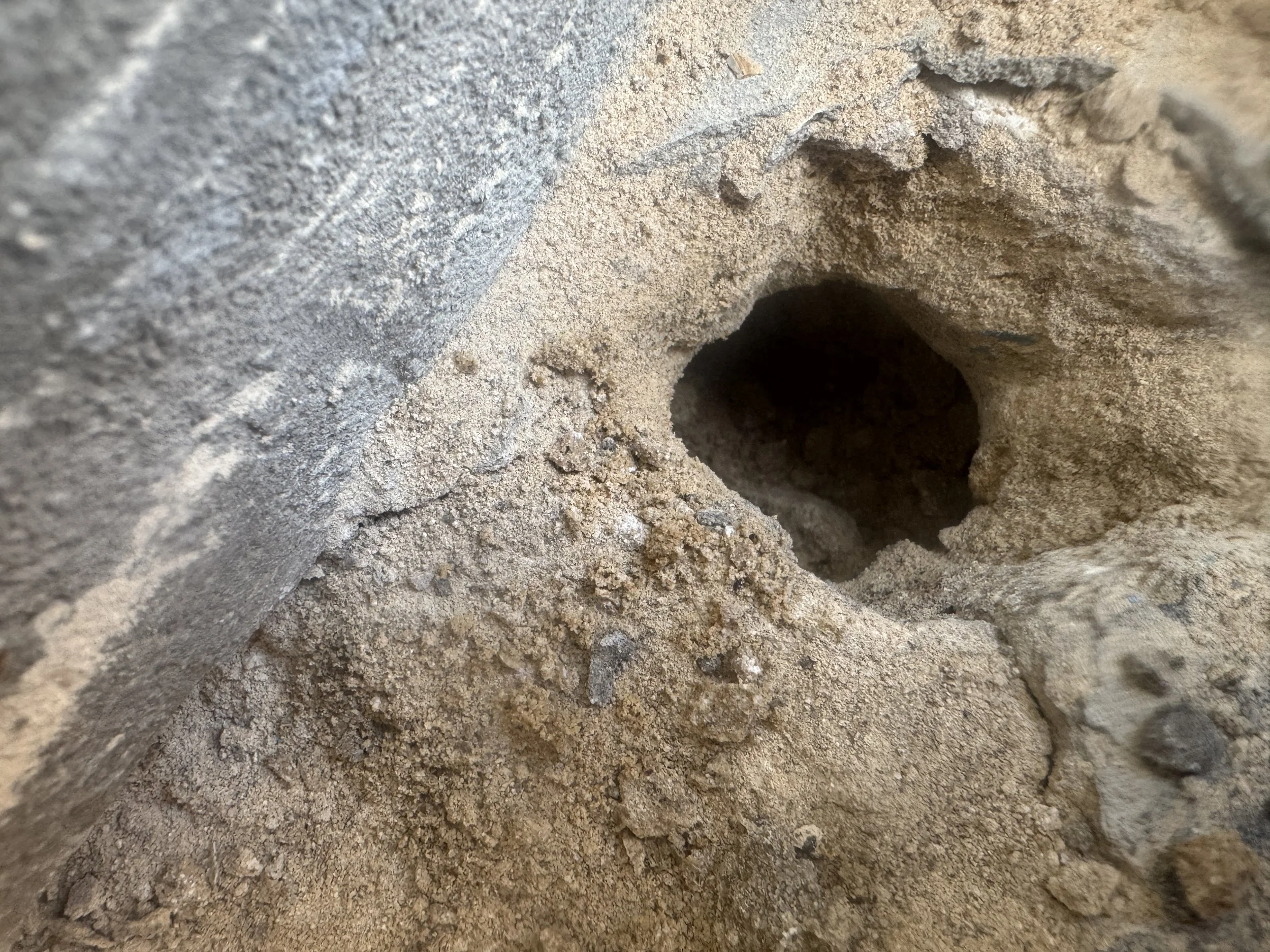
Opened three trial holes to confirm the floor construction and find the damp-proof membrane.
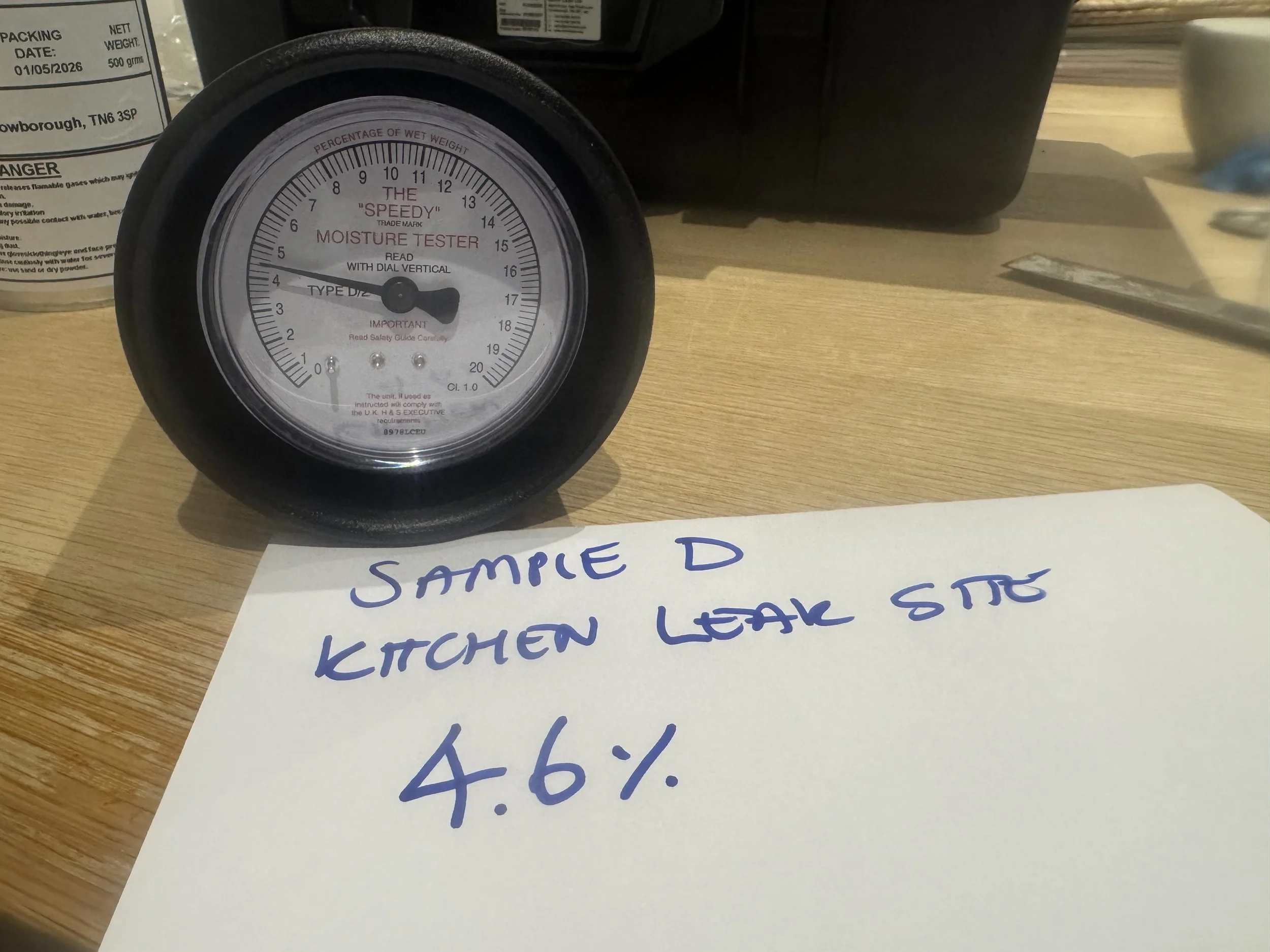
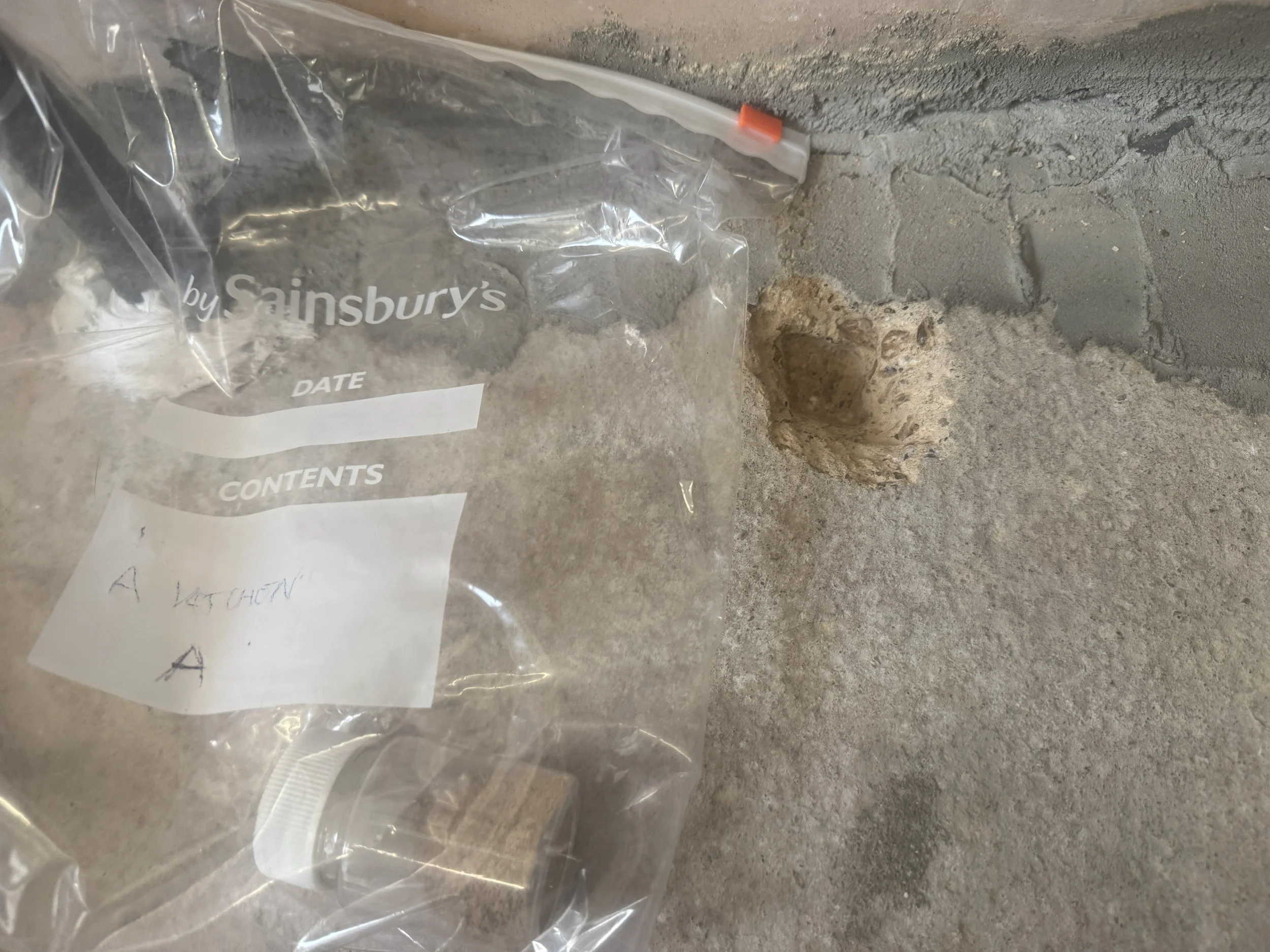
Took four concrete samples by hand and tested them by the carbide method, which measures the moisture content of the concrete itself.
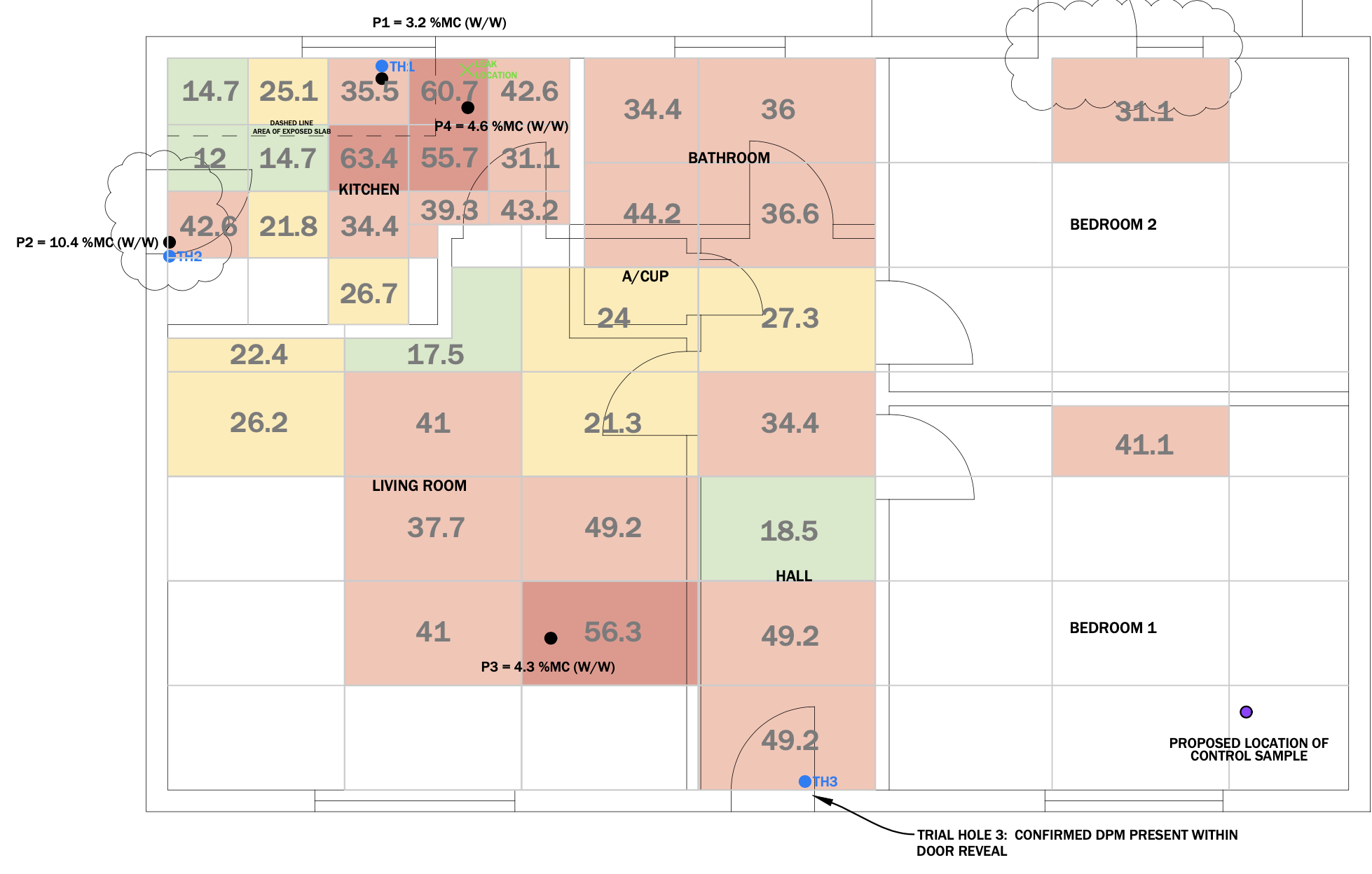
Mapped surface readings across the floors to show the pattern of moisture.
Inspected the walls, doors, drainage and ground levels to rule other sources in or out.
What I found
All four samples were above the 2% limit for laying new floor coverings, at 3.2% to 4.6% across the kitchen and living room.
The water had got behind the membrane at the wall and was trapped. The membrane below stopped it draining away, and the tiles and bitumen on top stopped it drying out.
Ground moisture and condensation were considered and didn't fit the evidence.
Two separate construction defects at the external doors were letting moisture in, but only locally. They didn't explain the wet slab at the leak site.
The insurer rejected the report, citing two surface readings of 12 and 14.7. Those are comparative instrument units, not moisture content.
In a supplementary note I explained the difference and reported a control sample taken in a bedroom, away from the leak. At 2.6%, it was well below the results around the leak. I also invited the insurer to carry out or attend its own carbide testing, rather than argue over meter readings.
When the insurer pushed back
A surface meter reading tells you there's a difference between two spots. It doesn't tell you how wet the concrete is. When a claim turns on that question, the answer has to be measured.
Why it matters